In this article
A crowded pantry hides food you already paid for. One afternoon of sorting, grouping and smart restocking turns it into shelves you can actually use.
Pantries rarely get messy all at once. A spare jar of peanut butter gets bought because the first one is buried. A sale on pasta adds boxes on top of boxes nobody remembered. After a few months, duplicates and stale goods crowd out the things you really cook with.
That clutter costs money. A typical American household of four loses about $1,500 a year to food that never gets eaten, and plenty of it is forgotten shelf-stable stuff tucked behind the cereal.
Clear everything out first
Take every item off every shelf, including the ones you're confident about. Seeing the pantry empty shows how much room you really have.
As you go, make three piles:
- Keep: still good and used regularly
- Toss: expired, stale, or off in smell or texture
- Donate: sealed, in-date items you won't use
Shelf-stable foods often outlast their printed dates. The USDA's free FoodKeeper tool, developed with Cornell University and the Food Marketing Institute, gives storage guidance on more than 400 foods and drinks, from dairy and eggs to meat, seafood, produce and baby food. Check it before discarding a can out of caution.
Some rough timelines for unopened goods: white rice keeps about two years, dried pasta about the same, and baking soda two to three years before it weakens. If an item is past its window but looks and smells normal, trust your senses. If it's visibly spoiled, throw it out.
Group by category
Instead of refilling shelves wherever things fit, set them up like a small grocery store: items sorted by purpose, with everyday staples at the easiest height. Good starter zones:
- Baking (flour, sugar, baking soda, baking powder)
- Grains and pasta
- Canned goods
- Snacks
- Breakfast items
- Condiments and oils
Put snacks and kids' foods on low shelves so children can grab them. Rarely used items, like a gifted fondue set, go up high or to the back.
Restock with first in, first out
Restaurant kitchens use a rule called FIFO, short for first in, first out, so nothing expires unnoticed. At home it's a single habit: when unpacking groceries, slide older cans and boxes forward and tuck the new ones behind. The closest item is always the oldest, so it gets used first. That alone prevents most duplicate buying.
Containers on a budget
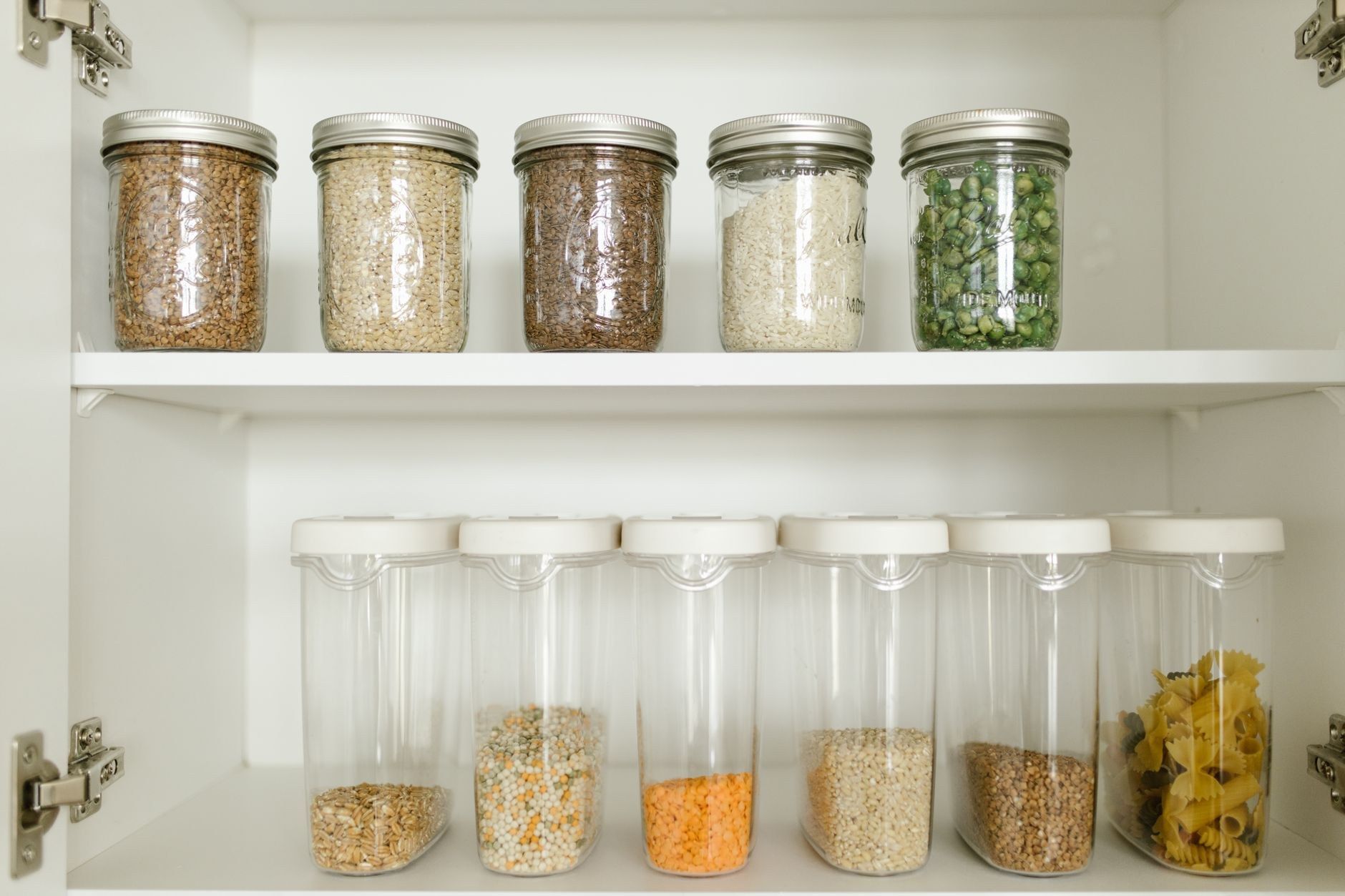
Matching canisters aren't necessary. Clear bins from a dollar store handle lighter items well, and they're especially useful for snacks, breakfast foods and baking supplies because you can see the contents instantly.
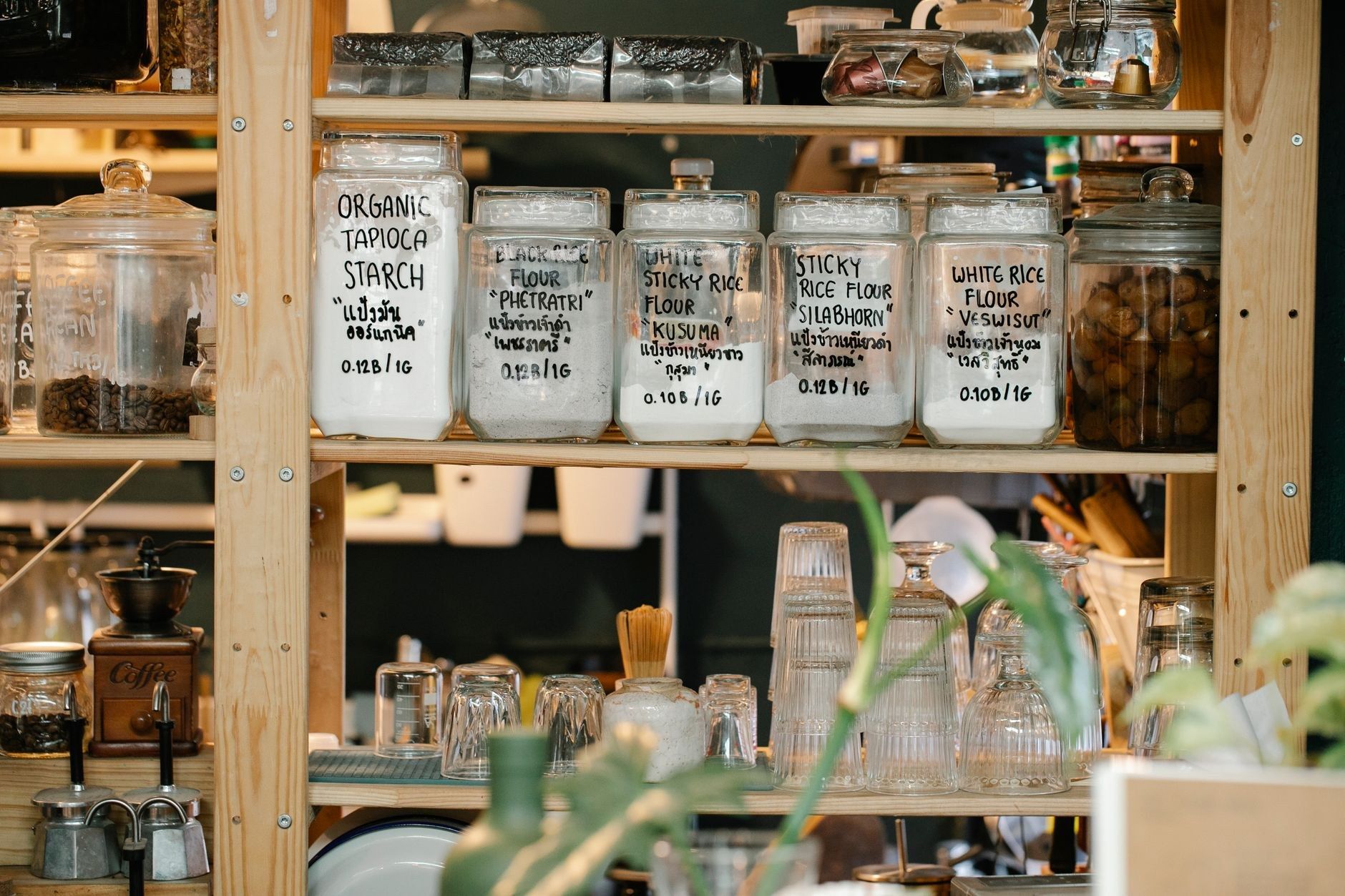
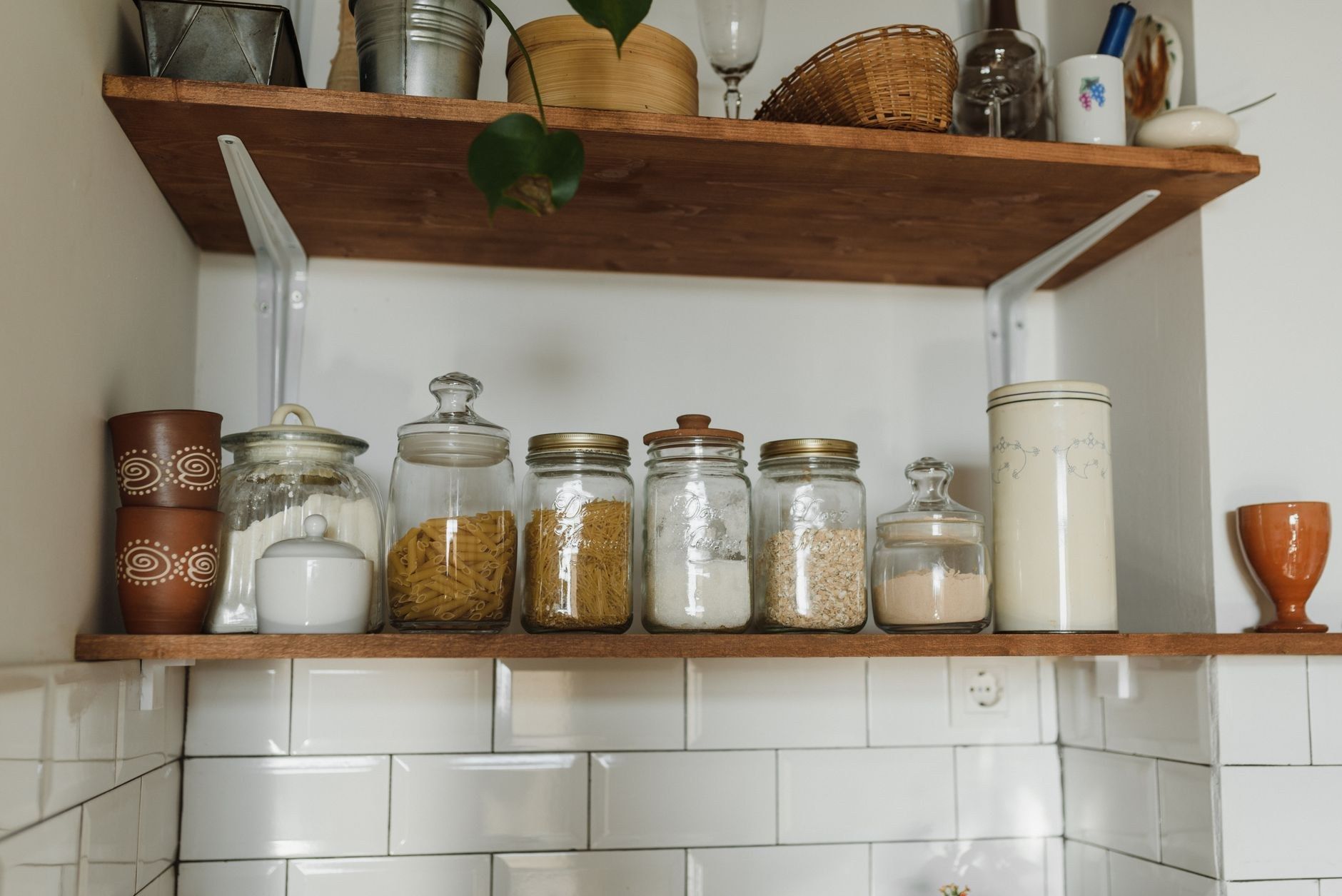
Flour, rice, grains, legumes and nuts deserve airtight storage, since cardboard and plastic bags can let in moisture and pests. Glass or BPA-free plastic both work, and a reused pasta jar or secondhand glass canister performs as well as a $40 set.
Also look at your shelf heights. Adjusting them to fit what you store can recover 20–30% more space, often more useful than any new bin.
Handling what leaves
Expired food goes in the trash, no guilt needed. Sealed, in-date extras such as canned goods, unopened spices or an untouched bag of quinoa can go to a local food bank. Most take shelf-stable donations, but confirm what yours accepts first.
Keeping it under control
Sorting is a one-time job; staying organized is a small habit. Take thirty seconds to check the pantry and fridge before every shopping trip so you don't come home with another jar of cumin.
Once a month, spend two minutes pulling forward anything that drifted back, checking dates and resetting zones.
Feeling overwhelmed? Start with a single shelf: empty it, wipe it, sort what returns, and tackle the next one another day. Steady progress beats a perfect pantry.